
The following is a statement from Frank Sharry, Executive Director of America’s Voice, reacting to the Congressional Budget Office (CBO) scoring of the Senate’s immigration bill:
The CBO score shows that there are now 197 billion reasons for Congress to do the right thing and pass immigration reform this year, and 700 billion more reasons over the following decade.
Immigration reform will boost economic growth, pay a hefty dividend to the American taxpayer, and lead to a significant decrease in the federal deficit – all this despite record-high spending on enforcement included in the Senate’s bill. And despite claims from anti-immigrant opponents, the CBO shows that immigrants are and will continue to be productive contributors to our economy and society — not a drain, but a gain for our nation.
Congratulations, Jeff Sessions–you got your wish!
For weeks now, the junior Senator from Alabama — and leading anti-immigrant voice in the Senate — has been complaining about the upcoming Congressional Budget Office score for the Senate Gang of 8 bill. The CBO usually scores a bill for 10 years, which Sessions didn’t think would be a long enough period of time to reflect his belief that immigrants are takers who are a drain on society. Sessions specifically wrote a letter to Doug Elmendorf, the CBO Director, asking for a 20-year score.
Well, this afternoon the CBO released its score–for 20 years, from 2013 to 2033. And here are the takeaways:
- The bill will reduce deficits by $197 billion over 10 years. This accounts for an increase in $262 billion in spending but an increase in revenue of $459 billion between 2014 and 2023.
- In the 10 years after that (2023-2033), the bill would reduce the deficit by an additional $700 billion. That’s almost $1 trillion in savings over the next 20 years.
- That means that immigrants would contribute more to the economy as they became eligible for legalization and citizenship, contrary to claims like that from the Heritage Report, which assumes that immigrants will only grow dependent on benefits as they become legal residents and citizens.
In other words, on top of everything else, the immigration bill is in America’s best economic interests. And if Jeff Sessions hadn’t pushed for a 20-year score, we wouldn’t have known how great the economic gains are.
As conservative economist Douglas Holtz-Eakin tweeted today, the “CBO report on Senate #immigration bill is a trifecta: growth, reduced deficits in short run, reduced deficits in long run.”
And for immigration reform opponents thinking about criticizing and downplaying the CBO score now that it’s out–and not to their liking–don’t even think about it. Here’s a short list of anti-reform GOPers showing love to the CBO score in the past, when it suited them.
- Chuck Grassley: “I say all the time that CBO is God around here, because policy lives and dies by CBO’s word.” (March 2006)
- David Vitter, on the US budget outlook: “The new Congressional Budget Office report released today further highlights why president Obama and Harry Reid need to immediately start making spending cuts – including entitlement reforms. The report says government benefits, if not reformed, could literally to engulf our entire economy.” (June 2011)
- Mike Lee: “CBO: Obama budget worse than projected on 10-year deficit. Projections only miscalculated by $2.3 Trillion.” (March 2011)
This afternoon, the House Judiciary Committee is continuing their markup of the SAFE Act (known on twitter as #HATEAct), which is already the worst anti-immigrant bill in recent history. (View the press conference denouncing it here.)
Rep. Steve King (R-IA), however, apparently just can’t help himself: King just attempted to insert a birthright citizenship amendment onto the bill–which would alter the Constitution, repeal the 14th amendment, and change an American way of life if passed into law. But as he said, he’s convinced that immigrant mothers who give birth to US citizens are nothing but “birth tourists,” which is reason enough for him to want to strip US-born children of their citizenship.
Even Chairman of the Judiciary Committee Bob Goodlatte (R-VA) knew somewhat better and shot down King’s amendment, though he did say the issue “needed to be addressed.”
What needs to be addressed? For more than 115 years, the Supreme Court has rejected the argument that children born in the US should be denied citizenship based on their parents’ immigration status. The King amendment would create a permanent underclass of children born in the U.S. and promote the very kind of class-based society that American should reject.
In any case, that’s a bullet dodged — for now. King’s Republican colleagues in the House of Representatives should take this episode as a sign of who they’re standing with every time they side with King, however. All those GOPers who voted for King’s amendment to deport DREAMers last week? There’s only more extremism–and less big-tent support–down that road.
This week, House Speaker John Boehner (R-OH) has begun to talk tough about how he plans to move immigration through the House—with a majority of the majority, he says, and no violation of the Hastert rule.
At a closed-door meeting with conservatives today and a press conference after, Boehner talked trash about the Senate immigration bill and said that there are no extenuating circumstances (like a fiscal cliff) for which he would violate the Hastert rule for immigration reform:
I also suggested to our members today that any immigration reform bill that is going to go into law ought to have a majority of both parties’ support if we’re really serious about making that happen. And so I don’t see any way of bringing an immigration bill to the floor that doesn’t have a majority support of Republicans….
I frankly think the Senate bill is weak on border security, I think the internal enforcement mechanisms are weak and the triggers are almost laughable
But Greg Sargent at the Washington Post is ready to call Boehner’s bluff. According to Sargent, Boehner has left himself an opening to call a vote on a bill that includes a path to citizenship. If the House is forced to take up the Senate bill (which has a path to citizenship), or if a House bill is conference in with the Senate bill and comes back with citizenship…will Boehner really let the opportunity to pass immigration reform and save his party’s demographic future slip by?
There’s some interesting sleight of hand here. Note that Boehner seems more focused on enforcement and border security than on citizenship. The Speaker is claiming that if a majority of House Republicans thinks the emerging proposal isn’t tough enough on border security, then the House won’t vote on it. But the real Rubicon House Republicans must cross is the path to citizenship. What happens if a majority of House Republicans can’t support the path to citizenship, no matter how tough the border security elements are made? In that scenario, if Boehner holds to his vow, the House wouldn’t vote on anything that includes citizenship, right? And that scenario very well may come to pass.
Someone needs to ask the Speaker: If a majority of House Republicans can’t accept a path to citizenship, will you really not allow a House vote on any emerging proposal that contains one?
There are two apparent endgames here. Either the House ends up not passing anything. In that case Boehner will have to decide whether to allow the House to vote on the Senate bill — including a path to citizenship. He claims he won’t allow it if a majority of Republicans opposes it. But the pressure on him to allow a vote will be very intense, from powerful GOP stakeholders such as the business community and wide swaths of the consulting/strategist establishment.
Or, alternatively, the House passes something and we go to conference. What happens if whatever emerges from conference contains a path to citizenship, and a majority of House Republicans don’t support it?
Asked today by reporters what would happen then, Boehner’s response contained a key tell:
Asked he would require majority Republican support on a bill that came out of a formal negotiation with the senate, Boehner said “we’ll see when we get there.”
In other words, Boehner would not rule out a vote that violates the supposed “Hastert Rule.”
I’m with Jonathan Bernstein: This all turns on whether enough Republicans privately want comprehensive reform to pass for the good of the party, even if they are not prepared to vote for it. If so, Boehner will let it go to the floor. Even if it must pass with mostly Dems. Don’t buy all the tough talk. Boehner himself doesn’t know how this is going to end.
House Members, DREAMers & National Immigration Leaders Denounce the SAFE Act
Leaders Call on the House to Get Behind Real Immigration Reform with Citizenship at the Heart
Washington, DC – Today, the House Judiciary Committee began marking-up a new immigration bill, HR 2278, introduced by Rep. Trey Gowdy and other Republicans. The bill, which they have misnamed the “SAFE Act,” would instantly turn millions of undocumented immigrants into criminals, much like the notorious Sensenbrenner bill of 2005, and take Arizona’s SB 1070 “show me your papers” law nationwide.
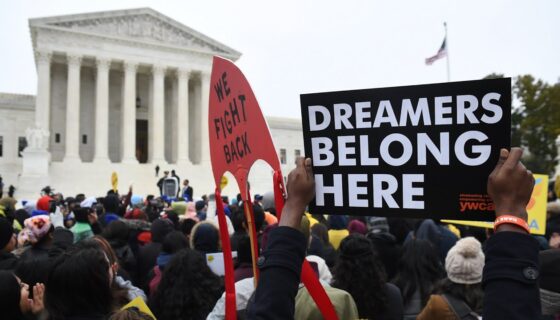
At a press conference today at the Capitol today, an overwhelming number of immigration supporters, including Members of Congress, DREAMers, and other national immigration leaders joined forces to denounce this extreme measure and call on House Republicans to get behind real immigration reform with a path to citizenship. DREAMers held signs and wore t-shirts saying “I am not a criminal” and “American DREAMer.” View pictures here.
Participating members included:
- Reps. Luis Gutierrez (D-IL), Mike Quigley (D-IL), Bill Foster (D-IL), Jan Schakowsky (D-IL), Xavier Beccerra (D-CA), Zoe Lofgren (D-CA), Tony Cardenas (D-CA), Alan Lowenthall (D-CA), Judy Chu (D-CA), Jared Polis (D-CO), Joe Garcia (D-FL), Charlie Rangel (D-NY), Joseph Crowley (D-NY), Congressional Hispanic Caucus Chair Ruben Hinojosa (D-TX), Sheila Jackson Lee (D-TX), Marc Veasey (D-TX), Lloyd Doggett (D-TX), Michelle Lujan-Grisham (D-NM), Steven Horsford (D-NV), David Cicilline (D-RI), Keith Ellison (D-MN), Gregorio Kilili Camacho Sablan (D-NMI)
- Lorella Praeli, Director of Advocacy and Policy, United We DREAM; Clarissa Martinez, Director, Immigration and National Campaigns, National Council of La Raza; Marielena Hincapié, Executive Director, National Immigration Law Center; Eliseo Medina, Secretary Treasurer, Service Employees International Union; Chung-Wha Hong, Executive Director, New York Immigration Coalition; Bruce Goldstein, President, Farmworker Justice; Rev. Xose G. Escamilla, Christian Church (Disciples of Christ), Pacific Southwest Region; Frank Sharry, Executive Director, America’s Voice.
Also watch the House Judiciary Committee mark up the SAFE Act here.
National Journal reports that anti-immigrant House members are asking why Republicans should pass legislation that would give citizenship to “11 million undocumented Democrats.” This fear of citizenship – and future voting behavior – courses through much of the immigration debate and underscores many Republican amendments designed to make the path to citizenship less attainable. As conservative Rep. Jim Jordan (R-OH) recently said of the focus of the immigration debate among House Republicans, “It’s about the 11 million. That’s always the issue.”
According to Frank Sharry, Executive Director of America’s Voice:
The GOP amendments to harden the ‘triggers,’ are driven by political insecurity, not border security. In fact, the enforcement provisions already in the Senate’s bill amount to the largest enforcement increase in American history. Too many Republicans are letting their fears of how the largely Latino undocumented population might vote in the distant future dictate their policy. But by advancing hardline immigration policies that threaten the path to citizenship and label the undocumented as criminals, Republicans are cementing their current reputation as anti-immigrant and anti-Latino and giving the much larger voting block of existing Latino voters more incentive to vote against them.
See below for the why the Republicans’ political fears are both misplaced and threaten to make their existing political predicament with Latino voters worse:
- Fool’s Errand to Predict Voting Behavior in 2026 – 13 Years is a Long Time in Politics: Current undocumented immigrants who would qualify for legalization and eventual citizenship would not be eligible to vote until at least the 2026 elections, under the Senate’s immigration plan. Thirteen years is a long time in politics – just think, in 2000, President Barack Obama lost a Democratic House primary by a 2:1 margin to Rep. Bobby Rush (D-IL). And just eight years ago, the Republican presidential candidate George W. Bush received 40% of the Latino vote. Point being, it’s a fool’s errand to predict the partisan preferences and voting patterns of a group of new voters from the vantage point of at least 13 years out, especially if both parties share credit in working to pass immigration reform.
- Republicans’ Continued Embrace of Hardline Immigration Policies Drives Away Current Latino Voters: A recent Latino Decisions poll shows that immigration continues to be as the top issue Latino voters want addressed. Immigration is also a motivating issue for this growing community, with 34% of Latino voters more likely to vote for the GOP if they work to pass immigration reform and 59% less likely to vote for the GOP if they try to block it. Additionally, 52% of Hispanics said that even if they disagree with the GOP on other issues they would be more favorable to the Republican Party if they pass immigration reform, including 55% of prior GOP voters, 47% of Democrats and 60% of Independents. This reason immigration reform is a priority is that its personal. Two-thirds of Latino voters have a close relationship with someone who is undocumented, including over 1 in 3 who have a family member who is in the U.S. without papers. The demographic imperative for the Republican Party to get right with Latino voters is getting ever more acute – every month some 50,000 Latino voters turn 18. The fastest way for the Party to repair its relationship with Latino voters is to work to pass good immigration reform. The way to make the hole they are in deeper is to vote to deport DREAMers, label immigrants as criminals, and to block opportunities for aspiring Americans.
- Conservative Voices Push Back Against Underlying GOP Fears: Washington Post blogger Jennifer Rubin recently captured the fallacy of the political opponents’ argument about future voting fears, writing: “To say that those who came here for a better life (an entrepreneurial act) and went through all the financial requirements and trouble to get citizenship and then to vote can’t be won over by conservatives is preposterous. (If it is true, by the way, conservatism should die because a political philosophy applicable to only one race or social class is not morally or politically sustainable.) Moreover, this overlooks the reality that until they stop threatening to deport immigrants, conservatives will not get an audience with a range of minority communities and will continue to offend moderate voters, women, and young urbanites who regard the GOP as ‘intolerant.’” Republican strategist Karl Rove similarly noted in a recent Wall Street Journal column, “Immigration reform is now a gateway issue: Many Hispanics won’t be open to Republicans until it is resolved, which could take the rest of the year.” And Senator Lindsey Graham (R-SC) noted this past weekend, “We’re in a demographic death spiral as a party and the only way we can get back in good graces with the Hispanic community in my view is pass comprehensive immigration reform. If you don’t do that, it really doesn’t matter who we run in my view,” referring to the 2016 presidential race.